Showing posts with label Mini-E. Show all posts

Monday, June 20, 2011

60,000 Zero Emission Miles Later...

Today the odometer turned 60k just as I pulled into the parking lot of my restaurant. It's been two years and seven days since I picked up MINI-E #250 now and the car is still running perfectly. Other than a couple of faulty battery modules very early on and the time I hit (well really was engulfed in) a huge pothole and needed front-end repairs, the car has been virtually maintenance free. 

That's not unusual for electric cars. They really are basically maintenance free. When you buy one, the dealer isn't reminding you to bring it in for your regularly scheduled maintenance like oil changes and tune ups. These regular maintenance items add up, but you really don't think about the cost when you buy a car, because you know it's just part of automobile ownership and there's no way around it. 
But there is...

Electric cars are extraordinarily simple compared to their gasoline burning counterparts and don't have hundreds of parts constantly moving and rubbing against each other causing friction and heat, and friction and heat are a cars worst enemy as they cause parts to wear out and need to be replaced. That's why you need to constantly keep fresh lubrication(oil) in your car to reduce the friction on all the moving parts and hopefully make them last longer.

EV's like the MINI-E have a simple brushless electric motor that will in most cases last longer than the car will, and that's really the only moving part of the drivetrain other than some small electric fans. Of course anything can break, especially electrical components, but by removing just about all of the moving parts in a car you are drastically reducing the mount of things that will wear out and need replacement.

So here I am at 60,000 miles and all the car really needed was a couple tire replacements and wiper blades. The range is surprisingly consistent, and just as good as when I first got it. There has been virtually no battery degradation after 60,000 miles and over 1,100 recharges.  Take a look at the picture above, I just drove 76.7 miles and still had 26% state of charge. I could easily drive another 30 to 35 miles(and probably 40) with 26% SOC since I could drive at least 10 miles even after the meter hits zero. Even the brake pads are the original ones. With the regenerative brakes, I bet I could get 100,000 miles on a set of brake pads so even the brakes will cost you less with an EV.

It's cost me about $2,500 in electricity (actually less because I have solar electric, but I like to figure what I would have paid) to drive 60,000 miles. Take a few moments and figure out what you have paid in gasoline to drive the past 60,000 miles. Then add up all the oil changes, tune ups, vacuum hoses, belts, exhaust pipes or whatever else you've done to keep your gas car running along and maybe you'll start to think about giving an EV a try the next time your shopping for a new car. After two years and 60,000 miles of zero emission driving I know I'm sold and I'm never going back.

Tuesday, May 24, 2011

After More Than 57,000 Miles, a 100 Mile Trip is Still No Problem


The other day I needed to go to a meeting at an office that I had never been to before. As always, I checked Google maps to see how far it was for two reasons: how much time will I need to drive there, and can the MINI-E make it or do I need to take my Toyota Tacoma that day. It's not often when I need to take the truck because I'll need to drive further than the MINI-E range will allow, but it does happen once every couple months or so.

When I checked Google maps it was exactly 50 miles away, and about one third of it was highway driving. My initial reaction was that I wouldn't take the chance, it's cutting the range too close and why risk having a problem. A big part of my reasoning because it has been unseasonably cool and rainy here in NJ and the difference of driving in 50 degree temperatures in the rain from 70 degree temperatures might be 10 miles of range or so.

Anyway, I then checked the weather channel and learned that the day I was to go to the meeting we were supposed to have a perfect day, clear and in the mid 70's. So then I started thinking about it, and it didn't take me long to come to the decision to take the MINI-E and take my chances. The plan was to drive there as slow as I could do safely, meaning 55mph on the highway, and the speed limit on the secondary roads using regen as much as possible, even trying not to use the mechanical brakes at all.

As my journey progressed it didn't take me too long to realize I wasn't going to have any problem. In fact, I arrived there, 50 miles later with 60% SOC. I had only used 40% to drive 50 miles! I did drive as efficiently as possible, and drove slower than I normally would, but this guaranteed me that I would make the 100 mile journey and I could even drive any way I wanted to on the return trip without worrying about being extraordinarily efficient.

So I the trip home I drove 70mph on the highway and didn't concentrate on using the regenerative brakes as much as I possibly could. I arrived back at the restaurant with 15% charge remaining which would be good for at least another 25 miles and if I really wanted to push it probably even 30.  I then plugged in and in under three house I was fully charged and ready for more another 100 miles if necessary.

When you add the 62 miles I drove to and from work that day, I drove the MINI-E 162 miles, not bad for a electric car with roughly a 100 mile single charge range. Anyway, the good news is that after more than 57,000 miles and over 1,100 charging cycles, the car still has the same range it had when it was brand new. This is significant because there are a lot of concerns about battery degradation in electric cars. It's going to start to happen at some point, I know that, but it is a bit surprising to me that I have been able to drive and charge the car as much as I have without noticing any decrease in range or battery capacity. This is good news for all electric cars in my opinion. 

Wednesday, May 18, 2011

How Much Electricity Will An Electric Car Use?

With all the talk about electric cars lately, one thing that I keep hearing is people wondering how much electricity will an EV need? Are they simply ditching the gas pump only to pay just as much in their electric bill? I made a post on this subject last year and I think it's important enough to re-post it again for anyone that hadn't seen it last year. With gasoline prices north of the $4 mark now and electric cars in the news, I have had a lot of new followers lately and I still get emails from people that ask me just how much does it cost to charge the MINI-E; so here it is, again....

One of the questions that people frequently ask me about the MINI-E is "How much electricity does it use?" Sometimes they'll just say "I love the car, but I wouldn't want to see your electric bill!"

When I tell them the car costs between $3.00 and $6.00 in electricity to go 100-120 miles they usually smile and say "Wow, that's great". The reason the range is between $3.00 and $6.00 is because there is such a difference in electricity rates throughout the country. The MINI-E has a 35 kWh battery pack but only 80% of the pack is usable which means it has 28kWh of available power. That 28kWh can move the car between 90 and 120 miles depending on how efficiently you drive. It is less in the winter months because the heater uses a lot of energy, but for most of the year these numbers are correct as an average.

The national average cost for electricity is $.12 per kWh which means it would cost the average person $3.36 to fully charge a depleted battery on the MINI-E. However rates do vary. I pay $.11 per kWh at my restaurant in Montclair, lower than the national average, but it costs me $.18 per kWh at my home in Chester, only 30 miles from Montclair. So if I "fill up" at work it costs me $3.08 but at home it costs me $5.04! Obviously I take advantage of the lower rates and charge at work as much as possible. So basically for what it costs for a gallon of gas today, you can drive an electric car like the MINI-E or Nissan LEAF about 100 miles.

Since I have a solar PV array at my home, I sell the electricity back to the utility at the rate they sell it to me ($.18/kWh) so every kilowatt-hour that charge at work saves me $.07. The average person drives about 15,000 miles per year. If they had a MINI-E they would need to use about 4,200kWh to drive 15,000 miles. If you use the national average, you would pay $504 for fuel for the entire year. If you use my rate at my restaurant, it's $462, at my home it's $756. So figure anywhere between a $40/month and $65/month increase in your electric bill if you had a MINI-E and drove it the average of 15,000 miles per year.

One of the great things about electric cars is that you can easily reduce your electric bill by $40 to $60 per month just by being more efficient and therefore completely eliminate your transportation fuel cost! You can't use less gasoline unless you drive less, but you can reduce your electricity usage and still drive as much as you always have. Simple measures like a programmable thermostat and the use of compact florescent light bulbs can make a big difference. In fact, five 100 watt light bulbs left on continuously for a year use the same amount of energy as it takes to power the MINI-E 15,000 miles! Here's how: five 100 watt light bulbs use 500 watts per hour. In 24 hours they use 12,000 watts or 12kWh. In 365 days they use 4,380kWh. What does the MINI-E use to go 15,000 miles? Remember above I calculated it to be 4,200kWh? So five 100 watt light bulbs use 180 more kWh than it takes to power 3,200lb MINI-E for 15,000 miles!

If you take a good look at your home electricity use, I'm sure you can reduce your usage enough to drastically offset the cost of electricity to power an electric car, if not completely eliminate it. Then, every penny of the money you would have spent on gasoline can go right into your pocket!

Saturday, May 14, 2011

Right or Left Pedal? Where Do You Want Your Regen?

One of the great features of electric cars is the regenerative braking. It really enhances the driving experience as well as extending your driving range as it captures the energy that would normally be wasted when you need to slow down. With conventional braking, the energy produced simply turns into heat and is wasted, whereas the regenerative braking systems in electric cars turns the energy into electricity and puts it back into your battery.

This is something that most people would never even think of and really have no use for when driving an internal combustion engine vehicle. You've got all the energy you need squishing around in your gas tank waiting to be set on fire so it can release that energy and propel the vehicle. However electric cars need to be as energy efficient as possible since they can only store a limited amount of electricity without becoming prohibitively expensive and heavy, since the more batteries you carry the more the car will cost and the more it will weigh, and decrease the vehicles efficiency.

Most people I know are a bit apprehensive when they first drive a car with regen. If the regen is activated by the left(or normal brake) pedal then you probably won't too notice much of a difference. However if you drive an EV with right (accelerator) pedal regen than your initial impression is probably that it definitely feels wrong, especially if it has strong regen like the MINI-E does. After driving your whole life in a car that doesn't have it, it really seems unnatural.

However after driving with it for only a short while, I came to really love it. Now, when I drive a car that doesn't have regen, I feel like somethings missing. I have driven cars with both right and left pedal regen and I definitely prefer to have it actuated by the right pedal. I can really do about 90% of my driving with one foot and it makes the driving experience a bit more sporty in my opinion. Slowing down for a curve in the road or to keep a safe distance from the car in front of you only requires you to gradually back off the accelerator. If you need to slow down more quickly, then just back off the accelerator completely and the regen fully engages and slows you down pretty quickly while sending some juice back to the battery pack. Of course if it's a situation that requires you to stop really abruptly, you always have the mechanical brakes to step on and quickly come to a halt.

Most people I know that have EV's say they prefer right pedal regen, and BMW believes that having it on the right pedal is the way to go also, as the MINI-E and the soon to be released ActiveE both have their regen on the right pedal. There are some people out there that have stated their opinions to the contrary though and say they want EV's to be as much like their gas powered cars as possible, and want all the braking, regenerative included, on the left pedal.

I believe that most people, if given the opportunity to drive an EV with right pedal regen would choose it over left and most of the people calling for it on the left pedal simply haven't driven a car for any period of time with right pedal regen, because if they did, they would prefer it that way.  Anyone care to chime in on this debate?

Tuesday, May 3, 2011

Have You Seen BMW's "Wherever You Want To Go" Film Series on The Future of Mobility?

I know I mentioned this film series a while back, but I'd like to remind those that might not have taken a look yet to do so. In the picture above you see me and fellow MINI-E pioneers Todd Crook & Peder Norby. We were enlisted to participate in the series of four short films and to talk about our experiences driving the electric MINI-E's and to offer our thoughts on the future of mobility.

The film series may not be entirely what you would expect. BMW didn't use this as a glorified advertisement for their brand. In fact, I don't think BMW is even mentioned! The purpose of the films were to open a discussion and make people think about where personal mobility is going.

Todd, Peder and I are really the only people in the films that aren't famous public figures so we were all really honored to participate and offer our thoughts alongside people like Buzz Aldrin(astronaut),  Marissa Mayer(VP of products for Google) and Wai Cheng (Director MIT automotive labs) just to name a few.

Anyway, If you haven't already, check out the film series. There are four short films (under ten minutes each) and they offer some interesting thoughts on where the future may take us. You can see them on BMW's Activate The Future website.

Monday, May 2, 2011

Infrastructure Issues? Did MINI-E #250 cause a Transformer Meltdown?

When I arrived at work a few days ago, I plugged in as usual, just to top off my charge and be ready for the next 100 miles or so. However after about a half hour, I noticed some of the power in the restaurant went out. Not all of the power, just about a third of it. I have seen this before, so I knew exactly what happened. I had lost one leg of the buildings three phase electric supply. I quickly walked outside to the utility pole to take a look and just as I imagined, one of the transformers had a wire that was disconnected and was arcing with sparks falling from it.

I quickly called PSE&G, and they arrived about a half hour later and quickly repaired the wire and the restaurant was back to normal and my car resumed charging. Since the wire was arcing and sparks were falling, the Montclair fire department was on scene and made sure nobody walked under the area. 

Now here's the problem: This happened about six months ago and at that time my car was also charging when the problem occurred. The PSE&G technician that repaired the line asked me "What do you guys have in the restaurant, I've never seen a the same transformer wire meltdown like this twice in six months" He than said the wire was all charred and looked like it had been in a fire. He suggested I call my electrician to better "balance the load" at the restaurant or this problem will continue to happen. I get what he's saying, perhaps the load isn't balanced well and I should analyze it and properly spread the load evenly among the three phases. However, I built the building eleven years ago and never had a problem, now this has happened twice in the past year that I have been charging #250 there, so I am inclined to think while there was an existing balance issue, charging the car at 12 kWh is definitely the draw that pushed it over the limit.

One of the things I have said I love about the MINI-E is it's ability to charge so quickly. It can charge up to 50amps at 12kWh and completely charge the 35kWh pack in about three hours. Compare that to the Nissan LEAF which only has a 24 kWh pack, and still takes eight hours to charge because it can only charge at 3.3kWh. This means it can only accept about 1/3 of the electricity that my MINI-E which isn't great when you want to charge up quickly, but definitely easier on your utility company. I definitely think this reason is why most of the major auto manufacturers are setting the charge rate of their EV's at 3.3kWh (LEAF & Volt) or 6.6kWh (Focus, Coda) instead of higher. Future BMW EV's (ActiveE & i3) will be limited to 7.7kWh which is probably a good decision, as balancing fast charging against not wanting their customers to blow up their transformers needs to be considered. Tesla on the other hand is going to continue to allow charging up to 16.8 kWh and uses the same AC Propulsion technology that allows the MINI-E to charge at such a high rate. They don't seem to be concerned about supply issues, only time will tell if they are correct. I know this, if after plucking down $60,000 or so to buy a new Model S, you find out that you keep overwhelming your utility supply and cannot charge your car, you aren't going to be very happy.


There will be growing pains. As electric cars become more and more prevalent, expect to hear about electricity supply problems from time to time. The one good thing about relatively slow adoption of electric cars is that it will allow the utilities to identify weaknesses and problem areas, and upgrade what need to be upgraded before there are millions of EV's driving around everywhere and not enough supply to charge them.

Friday, April 22, 2011

MINI-E Pioneers Get Exclusive Look at the ActiveE!

Aaron Singer of BMW explains some of the ActiveE features to the MINI-E pioneers.


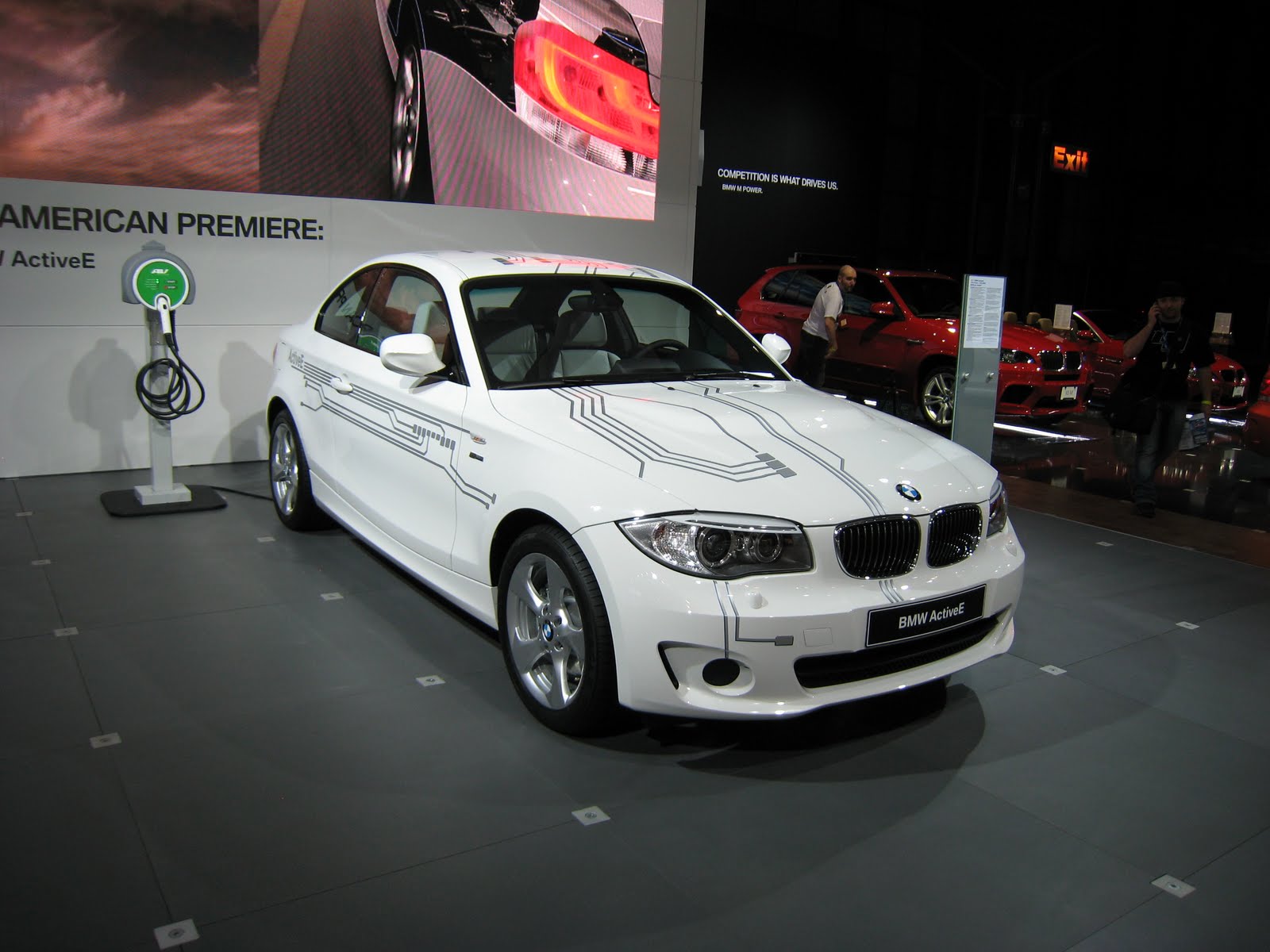
Last night the East Coast Mini-E pioneers were invited to a sneak preview of the BMW ActiveE at the New York Auto Show. The show doesn't actually open to the public until today, but BMW wanted the loyal MINI-E pioneers to get the first look at the successor to the MINI-E, and the final test vehicle they will be making before the 2013 BMW i3 hits showrooms. For those of you that are unfamiliar with the i3, it will be the first all electric car that BMW sells, and is scheduled to be offered for sale in 2013. The MINI-E, and now the ActiveE were low production test vehicles, leased to customers to help BMW refine the hardware and learn and overcome the challenges of introducing an all electric vehicle to the public so when they do sell the i3, it will be the best electric vehicle available. 


MINI-E customers have been promised that if we want to lease the ActiveE this year when the MINI-E program ends, that we would be guaranteed to be the first in line for one, and last night BMW took the opportunity so show us here on the East coast the car in person. A similar event is planned for the West Coast MINI-E pioneers next month. After the roughly 45 minute Q&A and everyone had a chance to sit in and check out the car, we were all taken out to dinner compliments of BMW. I'd like to than Rich, Hugo, Marian, Teresa and Aaron of BMW for hosting such a great event and making the MINI-E pioneers feel special. Taking the time in a very busy Auto Show week to spend a night with some of your customers was really appreciated by all of us. 

The cost will be very similar to the MINI-E's lease price, $2,250 down and $499/month which comes out to  $593/month over the course of the term. We are currently paying $600/month for the MINI-E, but that included comprehensive & collision insurance and the installation of the home charger. The cost of insurance and home charger have not been mentioned by BMW, so I'm guessing that means it will be the lessees responsibility. I think they would have announced that it would be included in the lease price if that was their intention. To be fair, no other lease program currently includes insurance and the home charger like the MINI-E program did so I won't be surprised if we are told that those things are our responsibility. If you add the cost of the insurance and the home charger, I'm guessing that will add about $2,400 to the total cost, or about $100 per month. We all have the electrical lines running to our current chargers, so all we need are the new chargers hooked up. The AeroVironment chargers that the ActiveE will be using can be purchased for $1,000 retail. I'm sure we'll get a better price since BMW is buying about 800 of them and the installation will take all of 15 minutes. Personally I plan to do the installation myself if BMW wants us to pay for it. My personal electrician will do it for me for $100; permit and all, I already asked him. The insurance should only cost  an extra $500 or $600/year since we're already paying the liability insurance for the MINI-E.

In case why anyone was wondering why my picture is on the jumbo screen behind the car in the photo above, it's because they were playing a video advertisement for the ActiveE in which, for a brief second or two, they played a clip from one of the short films about the future of mobility that I was in, so I waited until that moment came up and quickly snapped the photo! 

Anyway, the ActiveE looks awesome and although I'm really going to miss #250, I think the amenities offered in the ActiveE will take the edge off missing this car. The active thermal management and ability to precondition the cabin and battery(warm or cool it while still plugged into the grid) should make the car much better for me to drive in the cold snowy winters here in the North East. Plus, having a backseat and trunk will be nice also.

I'll be posting more about the event and the ActiveE in a day or so on my BMW ActiveE blog (You know I had to make a successor to this blog, right?) so check it out if you want to know more about the BMW ActiveE. Maybe you even want to apply to lease one also? Details on how to apply to lease an ActiveE will be posted on my ActiveE blog as soon as they are announced which should be in a month or two.

Monday, January 31, 2011

Thermal Conditioning for the Battery AND the Passengers!

The Cog & Temp icon you see it telling me the battery is too cold and the car will not have regenerative braking. I see this when the battery temperature gets in the low 40's. If the battery temperature gets any lower and the car will not accept a charge.

There's a lot of talk about thermal conditioning in electric cars, and for good reason. Maintaining proper battery temperature will not only help the vehicle to offer a more stable, predictable driving range, but will most likely be a big factor in determining how long the battery will acceptably perform before a replacement is needed.

The MINI-E is a wonderful vehicle. Those that have followed this blog know how I feel about it. I think the electric propulsion system pairs so well with the small, fun to drive MINI Cooper, that it's an outright shame BMW isn't going to offer it for sale in the near future, yes it's THAT good. All that said, the MINI-E is a prototype test vehicle and it does have it's faults. The most glaring shortcoming, is a lack of a proper thermal management system. The passive, cabin-air based system is insufficient to warm the pack in the winter or cool it off in the summer months. If the ambient temperature is below 95 degrees or above 50 degrees, everything is just fine and you can almost always squeeze out 100 miles of range if you drive conservatively, even 120-130 if you stay off the highways. However once the temperature extremes occur, the car lets you know it's not a happy camper. I'm going to focus here on the cold weather effects, since I did a post last summer about my hot weather experiences and difficulties.

The most obvious problem is the reduced range. I'm not really 100% sure if the battery simply cannot store the same amount of energy, or if it cannot efficiently use it when it gets cold, but the reduced range that the MINI-E has in the cold Northeast is something that you have to accept and manage. I know that it's not only the batteries storage/usage of the energy, but also the fact that the cabin heater uses a good amount of juice so it's really a double hit that conspires to cut into how far the car will go. This winter has been very cold and there are days when the temperature doesn't even approach 20 degrees Fahrenheit (-7C). On these days I'm lucky to push the car to 75 miles per charge. That's about a 30% reduction from optimal conditions, and in my opinion, it's just too much for the average retail consumer to accept.

That's -2 degrees!
Luckily, there is a better way to manage the battery temperature and thus the range, and that's by implementing an active thermal management system to heat and cool the battery as needed. These systems will obviously add to the cost to the vehicle, but in my opinion, it's money well spent. BMW seems to agree with me because their next EV offering, the 2011 BMW ActiveE will have active thermal management. I expect to be one of the few people driving an ActiveE this summer when the MINI-E program ends so I'll be able to report on how well the system does or doesn't work. This to me is the most important improvement that BMW can make from lessons learned in the MINI-E program.

MINI-E winter driving apparel !
There is one more thermal conditioning issue I need to bring to light. That's the MINI-E's inability to thermally condition it's passengers! There's no problem in the summer as the A/C works fine. However when it's cold outside, the MINI-E drivers here on the East Coast are cold also! The heater in the car is woefully insufficient to really warm the cabin or it's passengers. Those of us that have a MINI-E in NY & NJ have learned to deal with it, but it's not fun. Most all of us have learned to keep gloves, a hat and a blanket in the car at all times. Others have even used a hot water bottle(Now I know why BMW calls us pioneers!) I haven't done the hot water bottle thing, but I do keep a hooded sweatshirt, gloves and yes, a small blanket in the car especially when I drive home from work late at night when it's bitter cold outside and the car has been sitting outside for 12 hours.

My Garage Heater
Last year I did a post about installing a heater in my garage to keep the car warm overnight. It's works really well and even keeps my family room warmer because that room is adjacent to the garage. I set it at about 45-50 degrees so no matter how cold it gets outside the garage is around 45 degrees.  Recently I have also been pre-heating the cabin in the mornings. I have a small ceramic heater that I put in the cabin about 30 minutes before I leave for work. When I leave the cabin is very warm and I don't need to turn the heater on for a while and that helps to extend the range a bit. This is similar, but not as good as preconditioning, something all production EV's have the ability to do.

It's going to be really interesting to see how much better the BMW ActiveE manages the weather extremes. I trust the engineers over in Munich know what they are doing. I'm sure I'll be writing a lot on this issue once I've had the time to drive the ActiveE in the extreme weather and analyze my range data. It will be nice to use the MINI-E as a comparison vehicle as I write about the ActiveE. Hopefully I'll be using the word "improvement" a lot, but you never know...

Monday, January 24, 2011

California Trip to Appear in BMW Film about Electric Mobility

 
A few weeks ago I was asked if I would like to be in a documentary that BMW is making about the future of mobility. I accepted and a few days ago I was off to LA for the day. They asked two other MINI-E drivers Peder Norby and Todd Crook from California if they would also like to be in the film and they also accepted.
 
The idea for our part in the film was to get the three of us together and talking about our experiences driving an electric car and what our thoughts were on the future. Would electric cars become mainstream? What do we like most about them? Plus other questions about the future of cars. It was a great experience and really nice to finally meet Todd & Peder after over a year of communicating with them online. They both have MINI-E blogs also, and I have links to them here under "Other MINI-E blogs" on the right side border. Todd is #140 and Peder is #183. Others in the film include Astronaut Buzz Aldren, visual futurist Syd Mead, CEO of Virgin Galactic George Whitsides and a bunch of other notable individuals. (None more important than me, but really who is?)

There will be four short films that you can view online, each coming out a week apart in February. For now you can see the trailer at this link.

BMW put me up in the Universal City Hilton and covered all my expenses. The filming was only about 4 hours and we were paid a basic SAG rate for the day. Todd, Peder and I all had a great time and the producers told us we did great and gave them exactly what they had hoped we would. After the shoot, Peder had to charge his car for his 100+ mile home to Carlsbad and Todd and I went out for dinner.


However, as strange as it may sound, the most surprising part of the trip was in the car ride to the airport.  I was picked up at about 4:00am by a car service that was hired by the production company. We were only about 5 minutes into the hour and a half drive to JFK Airport in New York when the driver asked me if I knew of a 24 hour gas station in the area because he had only about 35 miles of range left so he needed to fill up. I told him there was one on the way and to my absolute surprise he responded "Thanks, I hate going to gas stations, what we need are electric cars!" I couldn't believe what I was hearing and for a minute I thought he knew why I was going to LA and was part of the whole film plan. When I told him that I was flying to LA to be in a film about electric cars, he had all kinds of questions and we talked about electric cars for the whole drive to JFK. He told me his name and I think it was Milon but I'm not 100% sure now. I did take a picture of him and gave him this blog address so he can stop by and read about my experience with an electric car. 

So check out the trailer and watch the four films as they become available. Feel free to critique my "acting"!

My film partners Todd Crook (left) and Peder Norby stand in front of their MINI-E's

Wednesday, December 22, 2010

MINI-E Driver Stefan Reitmeier Checks in From Germany


BMW has expanded the MINI-E program to include trial lease programs in Germany, the UK, France, China and soon they will launch in Japan. Many of the cars that are in these countries were originally leased to US customers and were redeployed abroad when the customers didn't renew for a second year as I did. 
This post was written by Stefan Reitmeier who is driving MINI-E #014 in Munich Germany.


My name is Stefan, I’m working in the automotive industry as an engineer for body-in-white joining technology and I’m driving the electric MINI #014 for the period of nine month in the German city of Munich. At my job I have nothing to do with electrical car engineering, but as I got the information that MINI E test drivers are searched in Munich for a public test program, I filled out the online application form on the MINI website. And I was lucky to get one!
 
In Germany BMW operates two test fleets of MINI E’s. Since June 2009 there are 50 MINI's in Berlin on the road. In 2011 their number will raise to 70. In Munich since June 2009 15 MINI’s were tested. This number was increased to 40 in September 2010. From these 40 cars, ten are operated by the Red Cross to gather information of electric cars used in the carpool of a fleet-operator. Four MINI’s are held by the companies involved to the test program and 26
were distributed to private users. For these cars they had about 670 applications via the internet.

At its first mission #014 got about 7000 mi (11300 km) on its odometer driven around Los Angeles by Kathy Bakken:
 
Now it's back in Munich:
 
The MINI’s returning from the US after their leasing contract ended are not scrapped, but overhauled and sent to new missions in Germany, France, China,...

Because the car is only ONE part of electro-mobility, local power suppliers and manufacturers of charging stations are also involved in the test program. In addition to the wall boxes for the private garages also several public charging stations in the city area are installed. In Munich about 30 public charging locations are operational or under construction.

In Berlin the power supplier made first steps to integrate smart grid features to the wall box. The user plugs in the car and selects the time when the SOC has to be 100%. The power supplier manages the charging and has the possibility to use excessive wind or solar energy in times of low power consumption to fill up the battery. Unfortunately in Munich this feature is not installed...  

I like the electric driving with the MINI E very much. The smooth and fast acceleration, the low level of noise and vibration, no exhaust...concerning to this every conventional car seems a bit old-fashioned and obsolete. Being part of the daily traffic jam sometimes I feel like a non-smoker surrounded by smokers.

I use the car almost every day. My daily commute to work and back is a total of 12,5 mi (20 km), so range is no issue. Nevertheless I do not charge the car every day and the maximum traveled distance with one charge spread over several days was 74 mi (119 km) with about 12 mi (20 km) left. But I do not want to go to or beyond the limits when having the chance to recharge.

On the German autobahn I usually have traveling speeds of 80-85 mph, which of course cut the range. But my parent’s home at a distance of 46 mi (74 km) is safe to reach. Recharging there is absolutely required before driving back. You have to consider MINI Es limited speed of 94 mph (152 km/h) when using the left lane of the autobahn to overtake a slower car. You quickly become yourself a slow obstacle for faster drivers with traveling speeds of 110 mph and more ...
Anyhow, the limited speed is necessary for a rational dimensioning of the electrical components in an electric car and the 94 mph are appropriate even for the German autobahn.

Not appropriate for German weather conditions is the lack of an active temperature management system for the battery. Temperature at present is 19°F (-7°C) and the battery temperature in the unheated garage drops to 34°F (1°C). At this temperature the MINI refuses to charge. But the car still drives. Due to my short commute the gain in battery temperature for the single distance is only about 5-7°F (2-3°C). With the car parked the whole day in the parking structure, the temperature may fall to a critical point where the car even won't start. The MINI-Team sent an E-Mail and warned that the car may fail at battery temperatures below 41°F (5°C)!

Thermal management of the battery is a crucial point for an electric car and the insufficient solution in the MINI E is maybe the biggest deficiency the car has.

In my opinion one of the cars main missions is: Bringing the electric drive into people’s minds in a manner that it is not just possible, but even better than a conventional one. This applies to both the people who buy cars and the people who develop and produce cars.

Keeping some restrictions in mind, the electric car offers:

- less noise/vibration and no exhaust (important for people both inside and outside the car)
- more driving joy (important for BMW and their customers)
- the chance to use renewable energy sources (important for all of us)

All deficiencies of the MINI E like limited space, reliability of the driving range due to unstable battery condition, inadequate performance of the cabin heater and so on are well known now and attributed to the prototype status of the car and its short-term realization.

At the next level the ActiveE will eliminate those deficiencies, providing four seats with a respectable trunk, an active thermal management of the battery, an improved visualization of the cars energy status and the ability to precondition the car while plugged in. This will increase reliability and provide the best use of the limited battery capacity.

The ActiveE will do the fine tuning before getting to the final level, the project i / MCV. As you can imagine, I'm quite excited about this...

You are invited to take a look at http://oh-e-mini.blogspot.com/ . It's my blog in German language.

Some posts I translated into English. In this case you can follow the English Version -link below the post headline.
 
With best regards from Germany
Stefan

Sunday, December 19, 2010

"EF-OPEC" has a Canadian Brother!

I get a lot of attention from other motorists while I'm driving around in MINI-E #250. However when I first got the car that wasn't always the case. BMW really didn't do much to announce that the car was a 100% pure electric car. There are decals of plugs on the car, but nothing actually said "electric". Many of the MINI-E drivers like myself complained about that and some of us added "electric" chrome emblems like I did to the side and back of the car. Some took it a step further and had vanity license plates made that further proclaimed our freedom from oil. My choice (and fact that I actually got it approved) of "EF-OPEC" has really drawn a lot of attention to me. Newspapers like the NY Times, the Star Ledger, the Daily Record and even the Wall Street Journal have noted my license plate.

So when Joerg of Vancouver, BC, one of the people that follow this blog saw the above picture in the Vancouver Sun, he knew he had to forward it to me. Joerg has been following this blog for a while now and occasionally emails me EV related articles. Joerg lives in Vancouver but is originally from Germany and has helped me translate English to German in the past.

I have never seen an EF-OPEC plate on any car other than mine before and I wonder if this person had it before I did. Perhaps they read about me and MINI-E #250 and got the idea there. I guess we'll never know. Anyway, it's great to see others have the same feelings I do even if it's on a car that does burn gasoline and need frequent oil changes. Maybe they just wanted to reserve the plate so when an electric car is available they can transfer it. Judging from the license plate, I bet this person will be one of the first in line to buy an electric car when one is available in BC. Don't worry buddy, you won't have to wait much longer...

Tuesday, December 14, 2010

Munich, We Have a Problem!


That icon you see of a plug with an exclamation mark is what the car is supposed to show if you have the car plugged in and charging and you try to start it up. The car will not start while it's plugged in so you cannot make the mistake of driving off while it's still tethered to the EVSE wall charger attached to your home. That would be like driving away from a gas station while the gas nozzle is still pumping gas into your tank, something that does happen every once in a while and is extraordinarily dangerous and at best only results in a destroyed gas pump and a huge insurance claim. At worst a spark ignites the spilled gasoline and the whole place blows up, along with you and the people working there!

The problem I have is that this icon is coming on and the car isn't plugged in. This means for some reason the electronics thinks the car is plugged in and won't allow me to start it. Plus, if I try to charge it the red protection light on the EVSE lights up which means it has gone into protection mode because there has been a problem detected. So basically I can neither start nor charge it, which leaves me with little choice than to have her towed in to Morristown MINI for the "flying doctors" to take a look at it. 

This is the first time I have had a problem and the car needed to be towed in about a year as the car has proven to be very reliable considering it is a prototype test car and even this time I believe I had a hand in on it's demise. On Sunday night I was charging outside at my restaurant in the rain. We had quite a storm and it was really pouring. When I unplugged the car, I quickly put the cap on the receptacle on the car as to not allow rain to get it wet. What I failed to realize was the the plastic cap had filled with rain water and when I slid it on the charge receptacle it flooded the area with water. 

I drove home without a problem, but when I arrived and went to charge the car, I noticed how wet the plug area was and that there was actually a lot of water inside the plug receptacle. I dried it off as best I could and left the cap off overnight to let it air out. I didn't need to charge the car to get to work the next day so that wasn't going to be a problem. In the morning when I tried to start the car all I would get was the icon pictured above, meaning the car believed that it was plugged in which it wasn't. By now the area looked dry, but I guess inside was still wet so I let the car sit all day and took my Toyota to work. 

This morning I got up and tried to turn it on again but I still get the plug icon. I figure that if it hasn't dried out in roughly 36 hours then the water probably did some damage that needs to be fixed so I called for a tow and it's now off to Morristown MINI. I figure this was 50% my fault and 50% the cars fault. I definitely shouldn't have poured water on the receptacle, but the car should be able to handle screw ups like this, there are plenty of idiots like me out there that make mistakes. I'm sure they could design the plug area better to prevent problems like this from happening and that is exactly what the MINI-E program is about; finding design flaws like this and correcting them so future EV's that actually make it to the showroom don't have them. The more I think about it, the MINI-E program was a brilliant idea. BMW is getting more real world data and information with this program than they could ever get with internal testing, and they are getting us to pay a lease payment to participate! Genius! So I sent Rob Healey, technical coordinator for the MINI-E and Vincent Immerso, MINI-E service adviser for the MINI-E at Morristown MINI an email that detailed the issue and a heads up that they should expect the car shortly.

Within an hour I got a call from Vincent and then an email from Rob to let me know they will get right on it today and get me that car back as soon as possible. Vincent asked me if I needed a loaner car, which I declined for the time being, and Rob informed me that Shaun Gillilan, one of the flying doctors was already en-route to check out #250. That is some great service!

So it looks like there is no need to call and complain to Richard Steinberg, manager of BMW's North American electric vehicle operations or Dr. Norbert Reithofer, BMW CEO to make them aware of this problem. The rank and file have this under control.

UPDATE: The car was fixed the same day and I already picked it up. As I thought, the problem was caused by excessive water infiltrating the plug recepticle. My bad!

Friday, December 10, 2010

#250 Gets a New Pair of Shoes

One of the great things about the MINI-E program is that everything is included in the $600/month payment. Everything includes all service and repairs (even if you caused damage or excessive wear) new tires when needed, even wiper blades and windshield  wiper fluid! No matter what breaks or is worn, it is fixed for free.

The East Coast pioneers (drivers in NY & NJ) also get free snow tires installed in the fall and then new all season tires installed in the spring. To make it easier for the dealers, the tires come mounted on new wheels so every 6 months I get a new set of tires and brand-spankin' new wheels. While the California drivers do get tire replacement as needed, they don't automatically get new ones every six months like we do on the east, and they certainly don't get new wheels every six months either. I'm on my fourth set of tires and wheels now in eighteen months with the car

Then again they don't have to deal with the problems the cold weather creates as we do so I guess BMW is throwing us on the East a bone for putting up with the reduced range and freezing interior(because the heater really doesn't work at all in cold weather) but that's a story for another post... stay tuned.

Monday, December 6, 2010

Little Car, Big Impact

The MINI-E is a physically small car. You don't need to park it next to big trucks to realize that.

However, the cliche "Big things can come in small packages" may never have been more appropriate to say about any other automobile than the MINI-E. Flash back to 2008 when BMW first decided to make the MINI-E. Other than the Tesla Roadster, there were no options for a highway capable electric car, and the Tesla really wasn't an option for 99.9% of the population. The only choice a person really had to drive an electric car was to build one themselves, which again, isn't much of an option for most people. When I came across the online application to test drive an electric car for a year, it was such a unique opportunity I went for it.

Honestly, I don't think BMW had any idea the car would be as successful as it has turned out to be. They originally offered only a one year, closed-end lease because they didn't know how good the car would be, if people would like driving them or if they really wanted to make a serious commitment to electric vehicles. The MINI-E was truly a litmus test to see how the public would react to e-mobility. Now, about two and a half years after BMW decided to conduct the Trial Lease program, they have offered second year renewals, expanded the program to six countries, announced the MINI-E successor(BMW ActiveE) and have announced plans to sell a purpose-built electric car in 2013, the BMW megacity.

The MINI-E has also made believers out of many of the lessees who, like myself weren't really sure that they could live with an electric car. Well, this little car proved without a doubt that we can and in fact prefer to. The smooth acceleration, instant torque, and quiet drive of the MINI-E give it an exceptional driving experience. The fact that I can use domestically generated electricity (or electricity that I make myself with my solar array) make it even more enjoyable. Energy independence is an important issue for many people. More and more people are realizing the effects our addiction to foreign oil has on America. The cumulative effects of spending (borrowing really) over a billion dollars a day on foreign oil is crippling our economy and the powerful oil lobby spends hundreds of millions of dollars to influence policy in our government. People are beginning understand how dangerous it is to rely on foreign regimes for our energy needs and want options. They want to be able to choose the fuel that they use to power their automobiles and the MINI-E came along and showed us what EV advocates have been saying for years now; that electric cars are a viable option and that there is a demand for them.

Recently autobloggreen.com posted an article titled: "How BMW created electric vehicle advocates through Mini E program" which basically said that the people that have leased the MINI-E love it so much they want to tell others how great it is. They are definitely right in saying this. Many of the MINI-E drivers like myself have become active in advocating electric cars, bringing our MINI-E's to green car events and even speaking at conferences and expo's about their experiences with the car.

About a month ago BMW announced they would be investing 560 million dollars to upgrade their Leipzig assembly plant to build electric cars and another 180 million dollars to build electric car components. That's nearly three quarters of a billion dollars! One thing is for sure, they wouldn't have made such a grand commitment to e-mobility had the MINI-E program been a failure. I'm pretty sure BMW had no idea how much this little car would effect the future of their company when they first proposed building it.

Wednesday, December 1, 2010

A MINI-E Police Car?

I stumbled upon this article on autoevolution that shows a converted MINI-E police car. The conversion was done by AC Schnitzer. There is obviously no plans to make these cars but I thought  it was a neat story and enjoyed seeing the MINI-E in colors other than the gray, black and yellow trim that all the stock cars com in. The yellow interior trim was also painted blue and additional gauges were added as well as a police radio. I do like the wheels, but I bet they would cut into the cars range a bit. Maybe BMW will do this conversion for me the next time I'm in for service, I certainly wouldn't complain....

Friday, November 26, 2010

Regenerative Braking: How Much is Enough?

For the most part, electric cars like the MINI-E drive the same as their pollution spewing  ICE counterparts. Sure they are much quieter and the instant torque of their electric motors cannot be matched by traditional gasoline powered motors. However overall they are still cars, much the same as others just with a different energy source. The biggest difference in driving an EV as compared to a traditional car is the brakes.

While traditional cars use regular mechanical brakes, who's function is solely to slow the vehicle down, electric cars employ regenerative brakes which have two functions; slow the car down, and capture energy.
When you use your traditional brakes, you are creating energy, you just have no way to capture and use it so it is simply converted into heat by way of friction and wasted. Regenerative brakes are a mechanism which slows a vehicle by converting its kinetic energy into electricity which is then put into the cars battery to increase it's range.

The MINI-E has become notorious for it's extremely aggressive regenerative brakes. When people drive the car for the first time it can be startling how strong the regen is. Journalists have written that the MINI-E's regenerative brakes are like deploying a parachute at highway speeds. I think that's a bit over the top, but I have to admit, they are very strong and you need to drive the car for a day or two before you get fully comfortable with them.

However once you do get used to them, everybody that I have spoken with absolutely loves it and missed it terribly when they drive other cars that do not have regenerative brakes. A friend of mine, Michael Thwaite drives a MINI-E in New Jersey as I do. Michael also owns a Tesla Roadster(lucky bastard!) and he and I were talking about the two cars recently and he told me that he likes the regenerative braking of the MINI-E better than that of the Tesla because it's stronger in the MINI-E. He even told me that after getting his MINI-E he wrote Tesla and asked them why they didn't make the regenerative braking stronger on the Tesla like it is on the MINI-E!

I have come to realize that although it may be disconcerting when you first drive a car with regenerative braking, once you have a little time with it you love it. This is true for all the MINI-E drivers that I know. You learn to drive with only your right foot and use the traditional brakes only in emergency situations. I'm certain I could drive the MINI-E more than 100,000 miles before I needed brake pad replacements for how little I use them.

However recently when I took #250 in for the regular 5000 mile service, I was told that they were making a "software tweak" and to see if I notice any differences. I do and I'm not really happy with it. The regenerative braking is definitely dialed back a bit, requiring me to ease up on the accelerator earlier than previously needed to slow down in time for a turn or a complete stop. During the eighteen months I have had the car, BMW has done these software tweaks a few times and almost always it seems the regen is dialed back a bit. I guess they are trying to get the most efficient balance between performance, range and regen. I just want BMW and the other auto manufacturers working on EV's to know this one thing: The stronger the regen the better! If you are afraid that some people won't like it so strong (believe me, don't worry about that) then allow the regen to be set by the driver and make it adjustable. Just don't take away my aggressive regenerative braking, the stronger the better!

Tuesday, November 16, 2010

Plugging In Beats Filling Up Any Day Of The Week

November 12th was my 17th month anniversary with MINI-E #250. I have driven it almost 45,000 miles and I am approaching my 800th recharge. I keep detailed records of every time I drive the car as well as every time I charge up so I know exactly how many times I have plugged in, and that would be 791 times so far.

Sounds like a lot of work, right? I often hear people say how they wouldn't want an electric car and one of the reasons is because it's so easy to drive to a gas station and fill up. When you do so, you're generally good for 300 to 400 miles of driving as opposed to only a hundred miles or so for an EV.

The thing is, it's really no work at all to plug in, and only people that have lived with an EV can honestly attest to that. When I arrive home at night, it takes less than ten seconds to walk over to my EVSE, grab the cable and plug in. The car charges while I'm sleeping, it's that easy. When you need gas, you have to drive to a station and wait for them to fill your car up before you can continue on your way. My other car, a Toyota Tacoma can go about 325 miles between fill ups so I would have had to fill up at least 140 times, and most likely would have done so about 150 times.

So what would I prefer to do?  Make 150 trips to the gas station or just pull into my garage like I always do every night anyway and take a few seconds to plug in my electric car? Continue to suck on the oil nipple that we have all been conditioned to believe that we need, or tell OPEC to shove their black gold up their a** and charge my electric car with clean renewable electricity that I make myself with my solar PV array.
Hmmm, let me think about that one for a while.........

Wednesday, November 10, 2010

I'm Hosting a Chevy Volt Party!

Lyle Dennis of GM-Volt and I have put together a Chevy Volt meet for this Saturday, November 13th from 11am to 2pm at my restaurant, Nauna's Bella Casa in Montclair NJ. Lyle is a member of GM's Consumer Advisory Board for the Volt and along with the other members, got his Volt yesterday. Lyle spoke to two other CAB members here on the East Coast and they too plan on bringing their Volts also.


This should be a really great way to get a look at one of the most anticipated cars in modern history before they are available to the public. We will have the cars on display in the restaurants parking lot.

Nauna's Bella Casa
148 Valley Road
Montclair, NJ 07042
www.naunas.com

Very few people have had an opportunity to see this car so far, much less three of them at one location. I'll have the MINI-E there also, but this is really going to be a Volt day! More details on the event  later. You can also check out Lyle's GM-Volt blog for information.

Update: There will also be a Tesla Roadster there on display as well as my MINI-E so it will be a really great showing for the future of electric transportation.

Monday, November 8, 2010

MINI-E #250 and I are Included in the Marketing for Chris Paine's New Movie "Revenge of The Electric Car"

Back in 2006 Chris Paine wrote and directed a documentary called "Who Killed The Electric Car". This is a must see movie for any electric car enthusiast. (Actually I think everybody should see it) The film purpose was to try to investigate why the automakers (mostly GM) made electric cars, took them back from the customers and then crushed just about all of them so there would be no chance of them resurfacing and proving how good they really were. Back in 2006 when Chris made this documentary it seemed a hopeless quest to try to encourage major automakers to commit to building EV's, they just didn't want to and would always say there just isn't enough consumer demand to justify making them.

Now jump only four years to 2010. Just about every major auto maker has an electric car in development and two of them, the Chevy Volt and the Nissan LEAF, will be available for sale within two months. BMW has had over 600 electric cars in real world testing for a year and a half now and is poised to start their second all electric test car, the ActiveE next summer and will sell their first all electric car called the megacity in 2013. Ford announced they will sell a Focus EV in 2012, Fiat will offer a 500 EV, Toyota has partnered with Tesla to make another RAV4 EV, Honda recently announced they will have an EV in showrooms soon, Smart will have an electric version of their car and Mitsubishi will offer the iMiev shortly. WOW! What happened in the scant few years since 2006 and nobody seemed interested in making electric cars?

So Chris is making a sequel called "Revenge of The Electric Car". The film should be out sometime this Spring and I'll announce more about it as the date approaches. I was contacted by Michelle Kaffko, producer of marketing and distribution for the film and asked if I was interested in having my EV story used to help promote the movie. There is a link to the movies website on the top right column of this blog or you can jump to it from HERE.  Or just go to the website and click on the tab at the top that say's "Take Revenge" and scroll down a little to see how I've "Taken Revenge".

Monday, November 1, 2010

MINI-E software "Upgrade": I'm Not Sure That's What I'd Call It

During the sixteen months that I've had the MINI-E now, there has been a few software "upgrades" that have been performed when I have taken the car in for the scheduled service every 5,000 miles. The reason for these are to correct any known "bugs" the software might have, like early on when some of the cars would jump from drive into neutral when you were stopped at a traffic light, and also to tweek the cars power output and regenerative braking to refine the driving experience and make it as smooth and pleasurable as possible.

When I brought the car in for service last week, Rob Healey, technical coordinator for the MINI-E, told me that they were doing a software upgrade and to let him know how I felt about the changes they made. Well it's only been about a week now so I'm going to give it a little more time before I email him to let him know how I feel about it, but so far I'm not really lovin' it. They did seem to make the transition from acceleration to regenerative braking and vise-versa more subtle and smoother, but the regenerative braking has definitely been dialed back a bit and I need to adjust to it. I have found myself using the actual brakes much more than I have needed before and I don't really like that. Perhaps once I get used to it I will adjust my driving to once again use the regen for most all of my slowing down and stopping, but for now I find myself having to use the brakes to prevent myself from running into the rear of the car in front of me or overshooting a stop sign or intersection. It may just be me needing to get used to the new program. After driving the car for so long I got used to exactly when I needed to let off the accelerator to slow down for a turn or stop at a light and I need to re-learn that again.

You might ask why BMW does this and that is a legitimate question. I'm not 100% sure but I assume they want to test different levels of regenerative braking for efficiency as well as customer comfort. I recently spoke to a Tesla owner who also drives a MINI-E here in New Jersey and he said the MINI-E's regenerative braking is much stronger than Tesla's. He needs to adjust every time he drives one car and then the other. Some people like very aggressive regen and others don't want it to feel like they released a parachute to slow the car down every time they let off the accelerator. After driving the MINI-E I have learned to love the aggressive regenerative braking and for me, the stronger the better. Personally I think all EV makers just allow the driver to adjust the regen to the level they feel most comfortable with. I'm sure it wouldn't be difficult to have that as an option that the driver can set to the position they like.